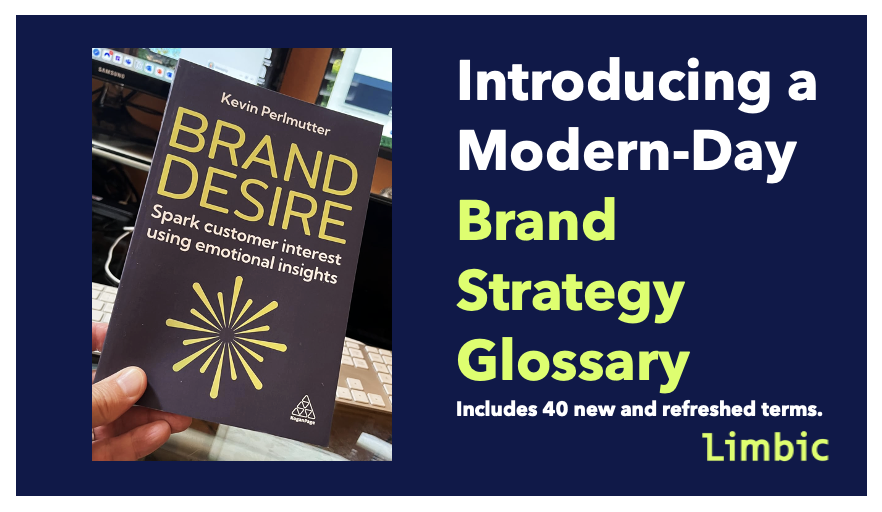
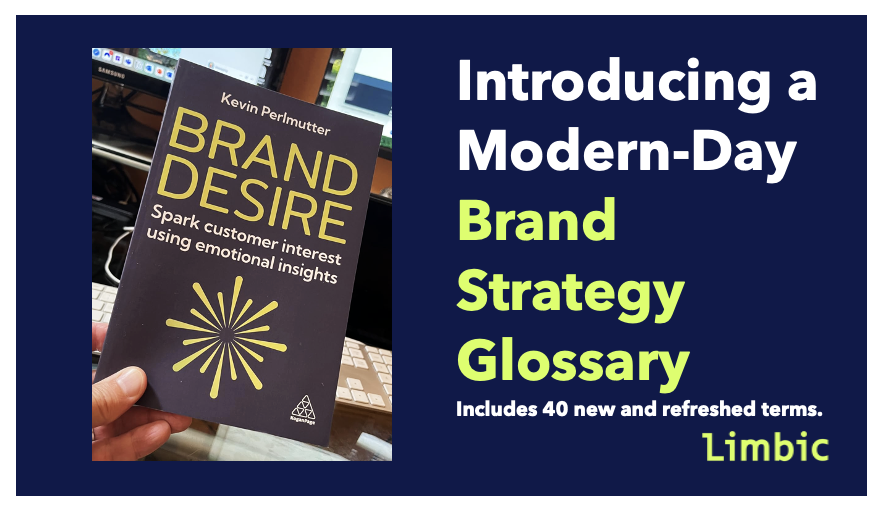
Introducing a Modern-Day Brand Strategy Glossary
As any brand strategist and marketer knows, wording and language are everything.
We all know what it’s like to find the perfect words to express brand benefits that will spark people’s interest. Words are powerful, and slight differences in phrasing or word choice can impact how a brand is perceived, and whether or not people care to bring it into their life.
However, what we don’t think about as much as we should is the language we use to guide our brand evolution and marketing efforts. Much of it is sending us down the wrong path.
Reframing Old Language to Prioritize Emotional Insights & Benefits
In this new era that is rooted in behavioral science, we must prioritize emotional insights in our brand strategy work, and that starts with changing our language. New language will guide a customer-centric approach that appeals to what customers actually are looking for.
For your brand to spark people’s interest, you must understand what matters most to the people your brand is there to serve. You must uncover their emotional motivations, so you know how to help them feel your brand is one they want in their life. You must stop selling.
It’s Time to Rethink the Language of Brand Strategy and Marketing
When writing Brand Desire, I included a Limbic Sparks Brand Strategy Glossary. It includes 40 new and refreshed terms to help our industry overcome the limitations of traditional brand strategy.
I realized that brand strategy language used throughout our industry is stuck in the past. It's rooted in the outdated terminology from persuasion era - a time when advertising was dominant. It's time to eliminate terms like Unique Selling Proposition, Proof Points and Reasons to Believe – which all put your focus on selling versus solving. Old words carry meaning and direct action.
Take the Unique Selling Proposition, for example. If that’s the pinnacle of a brand strategy brief, then everyone who created it, approved it, and will develop brand expression off it, will be focused on “selling” – saying what they think needs to be said to persuade people to buy.
If you want to be better at attracting and retaining customers, you can’t be selling. You must be solving. Nobody wants to be sold to – in fact, you yourself most likely actively avoid being sold to.
See Also: Why Yesterday’s Consumer Insights Are No Longer Enough
Brand Desire Introduces a Modern-Day Brand Strategy Glossary
Brand Desire details how to apply Limbic Sparks Brand Strategy to your work, and it includes a glossary that replaces old terms, updates definitions, and introduces new terms that put you in the mindset of understanding and addressing the emotional motivations of the people who your brand is for.
Here are a few of the 40 terms included throughout Brand Desire, and summarized in its Limbic Sparks Brand Glossary:
Brand: A unique combination of elements representing an organization, product, or service that evoke an overall impression people have based on all their associations and experiences. (It’s not just your logo.)
Emotional Motivations: The driving forces behind our decisions and behaviors. (It’s insight you should not live without.)
Shared Emotional Motivation: The core Limbic Sparks insight, identifying what both the brand and customer are most motivated to achieve, individually and with each other. (It’s the core insight that informs the brand strategy - and it doesn’t exist in traditional brand strategy.)
Core Brand Benefits: The most emotionally desirable and sought-after benefits across all customer segments. (The key point is “emotionally desirable” – not simply what brand leaders want to tell people.)
Brand Idea / Tagline: The overarching compelling brand benefit and invitation. (It’s not an “about us” statement - it must be a compelling benefit and an invitation.)
Words matter, and using the right ones in your work will help to ensure you and your team prioritize a customer-centric approach that puts emotional motivations at the center of consideration. It will ensure that your brand is not selling, and instead emotionally compelling.
See the Full Brand Strategy Glossary in BRAND DESIRE
Featured Articles & Podcasts